
PP Security Seals: How to Choose Between UV Laser Marking and Infrared Laser Marking
PP Security Seals: How to Choose Between UV Laser Marking and Infrared Laser Marking A practical guide to choosing the right marking process for polypropylene
Polypropylene, commonly known as PP, is often referred to as the ‘hundred-fold adhesive’ due to its excellent impact resistance.
PP is a semi-transparent, semi-crystalline thermoplastic with high strength, good insulation properties, low water absorption, a high heat deflection temperature, low density, and high crystallinity.
Modified fillers for PP often include materials such as glass fibers, mineral fillers, and thermoplastic elastomers.
The flowability of PP varies significantly depending on its intended application, with the typical flow rate falling between that of ABS and PC.
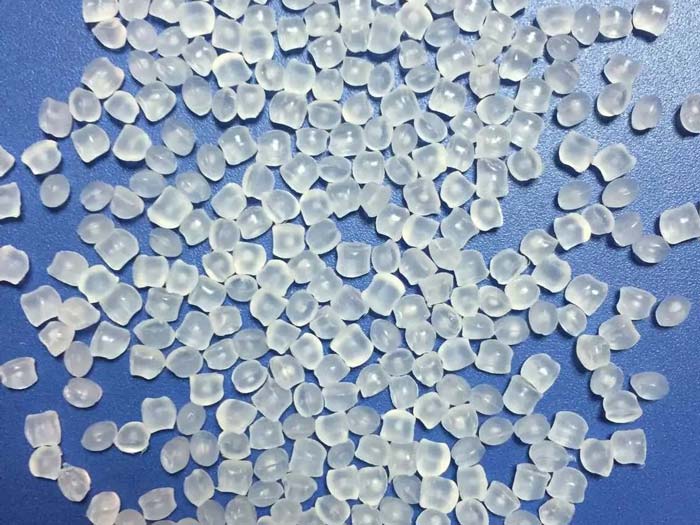
Pure PP is semi-transparent and ivory-white, which can be dyed into various colors.
The coloring of PP typically requires the use of color masterbatches on standard injection molding machines.
For outdoor applications, UV stabilizers and carbon black fillers are commonly employed.
The usage of recycled materials should not exceed 15%, as it may lead to reduced strength and discoloration.
Generally, PP injection molding does not require specific drying treatment before processing.
There are no specific requirements for the selection of an injection molding machine for PP.
However, due to PP’s high crystallinity, it’s advisable to use a computer-controlled injection molding machine capable of high injection pressure and multi-stage control.
The clamping force is typically determined at around 3800 t/m², and the injection volume can range from 20% to 85%.
The mold temperature should be maintained between 50-90°C, with higher temperatures used for applications with stricter dimensional requirements.
The core temperature should be kept at least 5°C lower than the cavity temperature.
The runner diameter should be 4-7mm, and the needle-type gate length should be 1-1.5mm, with a diameter as small as 0.7mm.
For edge gates, shorter lengths are preferable, approximately 0.7mm, with a depth equal to half of the wall thickness and a width twice the wall thickness. The length of the gate increases gradually with the melt flow length within the mold cavity.
Proper mold venting is essential. Vent depths should range from 0.025mm to 0.038mm, with a thickness of 1.5mm. To avoid shrinkage marks, large and round gates, as well as circular runners, should be used. The thickness of reinforcing ribs should be kept low, around 50-60% of the wall thickness.
For products made from homopolymer PP, the thickness should not exceed 3mm, as thicker sections may result in bubbles (copolymer PP should be used for thick-walled products).
PP has a melting point of 160-175°C and a decomposition temperature of 350°C.
But during injection processing, the temperature setting should not exceed 275°C.
The melt zone temperature is ideally around 240°C.
To reduce internal stress and deformation, a high-speed injection should be chosen.
But some grades of PP and molds may not be suitable (e.g., when gas bubbles and flow marks appear).
If the surface with patterns shows alternating stripes diffused from the gate, it’s recommended to use low-speed injection and higher mold temperatures.
A melt back pressure of 5 bar can be used, and the back pressure for colorants can be adjusted accordingly.
Use higher injection pressure (1500-1800 bar) and holding pressure (approximately 80% of the injection pressure).
Switch to holding pressure at about 95% of the full stroke and use a longer holding time.
To prevent shrinkage deformation caused by post-crystallization, products generally require a heat soak treatment.

PP Security Seals: How to Choose Between UV Laser Marking and Infrared Laser Marking A practical guide to choosing the right marking process for polypropylene

How Are Plastic Security Seals Printed? 6 Methods Explained A Complete Comparison of Common Marking Processes Plastic security seal printing methods play an important role
Controlled Breakaway Cable Ties: How They Differ from Security Seals Similar in Appearance, but Designed to Solve Two Different Problems Security seals and controlled breakaway
Comparison of Ultrasonic Welding and Heat Staking in Security Seal Production Lines In the production of Security Seals, injection molding is only one part of